
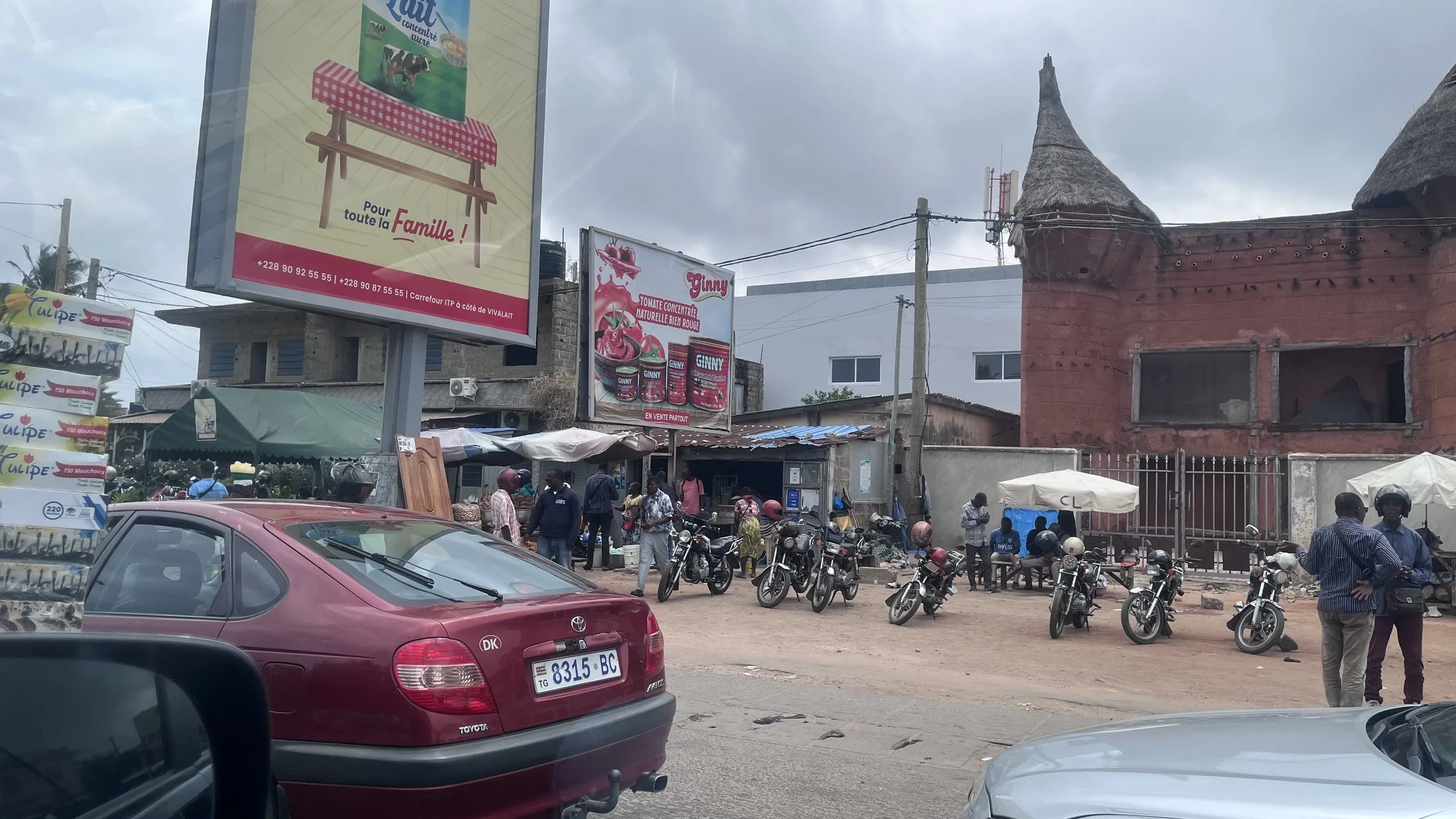
The FameWorks were in West Africa again last month, in particular three countries enjoying high growth of late – Togo, Benin and Côte d’Ivoire. Such impressive growth is down to various factors – relative political stability, improving infrastructure and young, energetic populations. But one of the drivers of this growth is in plain sight as soon as you (attempt to) cross a street...
A second hand Haojue 125 – rather nattily reminiscent in its rounded contours and chrome rims of the models one used to see on British roads – will set you back about €700, or about 4 months’ average wage, but the streets in Lomé, Cotonou and Abidjan are teeming with these machines; not just the ubiquitous Haojues (produced in Togo and exported across the region) but also Jinchengs, Fenghaos, Dayangs, TVSs and others.
And by all accounts it’s money well spent... The African urban population will be around a billion by 2035 and 86% of the greater African economy is informal. In these circumstances, a motorbike able to get you, with your particular skills and wares to wherever you need to be in reasonably good time, is a Godsend. All the better if it’s sturdy enough to deal with the odd pothole and rough patch, and capable of carrying 3 or more people when called upon to do so.
One thing that’s also apparent in these cities, is that most of the motards are men. This is a little counterintuitive given that it’s women, with their enterprising informal sector side hustles, who are delivering much of the consumption led growth. Traditionally, in many African societies, women’s role has been in the home: cooking, cleaning and rearing many children. As family sizes decline, traditional roles are changing, albeit slowly.
There is a growing movement to normalise women’s cultural right to straddle the urban steed and buzz around making things happen. Bamba Edith Christine’s wheels of choice are a growling Yamaha 900; she heads AIMA, the Ivorian Motorcyle Association. And Nigerians Udoh Enaide Joy and Omolowa Adesuyi (Mama Spade) are also making plenty of noise asserting women’s right to be motardes.
But the West African country that appears to be at the forefront here is neither Togo, Benin or Côte d’Ivoire; it’s Burkina Faso, where on the streets of Ouagadougou, there are at least as many women on motorbikes as men. It’s not altogether clear why they’re so far ahead, though it’s speculated that Burkinabes have long had a particular radical streak. Either way, when it comes to two-wheeled female emancipation, they seem to be the leader of the pack. (Vroom, vroom!)