
The FameWorks were in Kinshasa a couple of weeks ago. None of the classic clichés about big cities quite do it justice. Hectic, frenetic, vibrant, an assault on the senses... it’s all of these but Kinshasa somehow demands its own vocabulary, to be found in some bizarre intersection of Brownian motion, apocalypse and bacchanalian festivity. The city seems to be perennially swimming in a humid petrochemical smog, the streets beyond the genteel diplomatic quarter thrust into lugubrious shanty hinterlands and the roadsides are a kind of dry grey bilge - a foul palimpsest of asphalt, urban effluent and a trillion flattened and ground up plastic bottle carcasses in varying stages of decomposition.
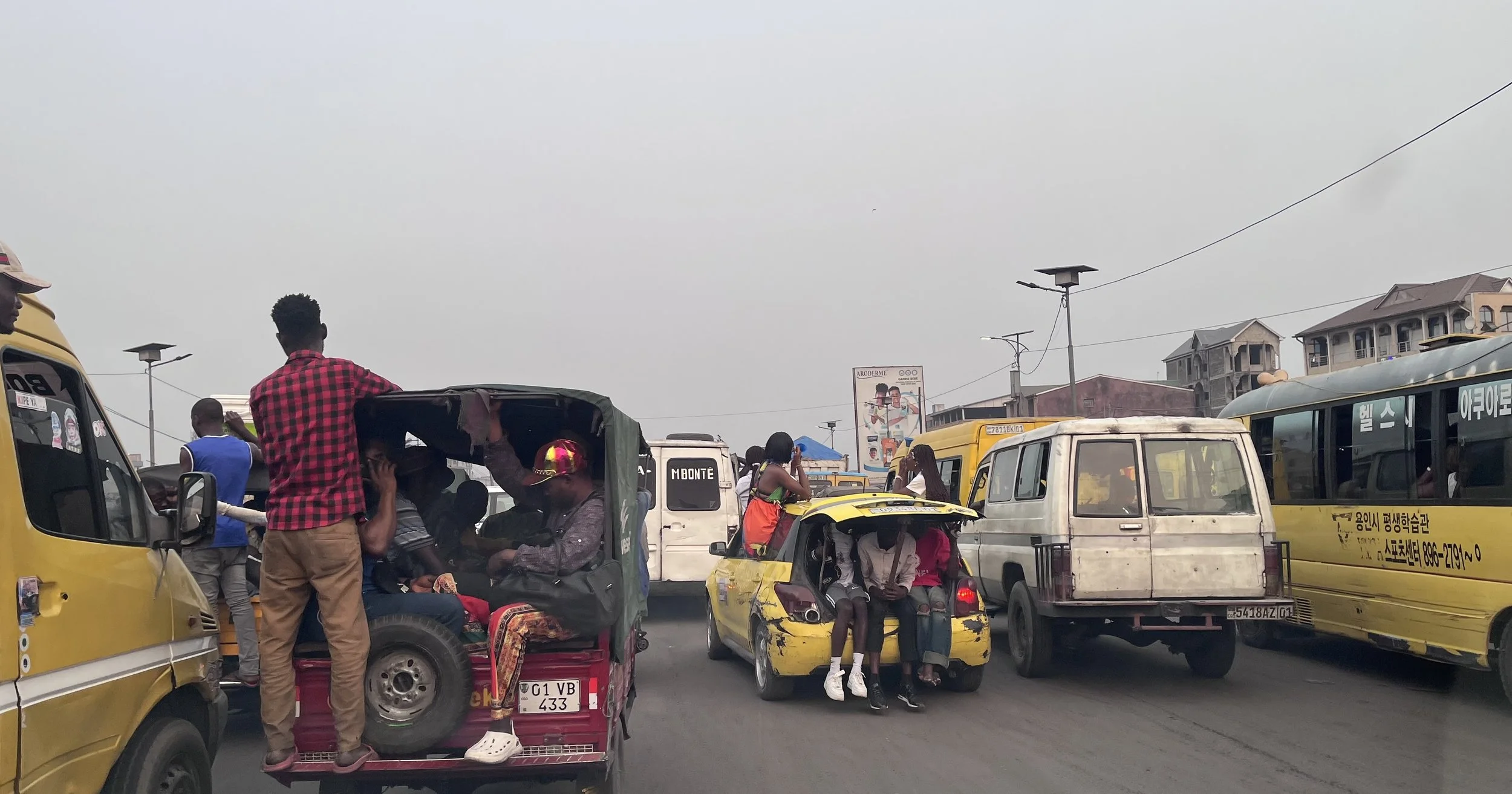
Kinshasa is reckoned to have a population of 22 million, up from 8 million in 2005. Read these figures again and imagine London or New York growing at that rate! This is a city whose eternal traffic jams are caused as much by weight of pedestrians as by weight of vehicles. The River Congo, which even here, 500km from the Atlantic Ocean, is a good mile wide, hems in the madness with its immense serene progress; though this is no postcard picturesque; it’s an imperious and disquieting beauty, Conrad’s implacable force brooding over an inscrutible intention.
Yet for all the the sullen, choked skies, the maddening din, and the inescapable sense of foreboding, Kinshasa 𝘭𝘪𝘷𝘦𝘴. It lives in the indomitable energy of its people, in the daily ricochets of human encounter, in the deafening mayhem of colliding perspectives.
It’s the stuff of commonplace that big cities produce a particular kind of human sophistication. Not just the smarts to survive, but a certain cultural depth. You tend to notice it as soon as a Kinois opens their mouth...
Even modestly educated Kinois speak French, where the situation demands it, as a lingua franca - and not the stilted book-learnt clip one finds in other parts of la Francophonie - they speak it like they own it, with an affecting suave gentleness. Chances are they’ll also have another ethnic language under their belt.
And then pretty much everyone has Lingala, the regional lingua franca. This, the sensuous language of soukous, emerged out of the Bantu-based Bobangi pidgin of early river trade. Nowadays Lingala draws wantonly on French, English and Portuguese vocabulary, which it twists into the weft and warp of its inflections. It never stands still. Catholic missionaries in the 19th Century tried to formalise it and create a Lingala classique but it’s a fool’s game trying to crystallise an idiom that’s in constant bloom and transformation, the better to describe an ever changing human story. Most Congolese say they don’t understand a word of Lingala classique.
For the Kinois, dynamic polyglotism is simply what you do. Or perhaps better said it’s what you are... because perceiving the constantly evolving surroundings of your crazed home through any one of three or more interchangeable lenses (for this is what polyglots intuitively do) bestows on the individual a special facility with complexity and nuance.
And therein lies the heart of this dark and fraught city.